![]() ![]() |
May 14, 2014 - 11:42 AM
|
|
|
Enthusiast ![]() ![]() Joined Apr 24, '14 From Durham, NC, USA Currently Offline Reputation: 0 (0%) |
JULY 22 UPDATE: "BRAKE JOB" FINISHED. (See comment of today's date.) JUNE 2 UPDATE: REAR BRAKES FINE NOW; FRONT RIGHT STEERING KNUCKLE DEFINITELY BENT (AT THE EARS); SEEKING ANOTHER KNUCKLE. MAY 28 UPDATE: NOW WHAT? THE REAR WHEELS ARE LOCKED BUT THE PB IS DOWN! WHAT THE HECK IS GOING ON? MAY 27 UPDATE: SATISFIED THAT THE REAR DRUM BRAKES ARE NOW FUNCTIONING PROPERLY; PROBLEM DEFINED DOES NOT AFFECT THE BRAKE AT ITS PROPER ADJUSTMENT OPERATING POINT; MOVING ON TO NEXT TASK MAY 23 UPDATE: REAR DRUM BRAKE PROBLEM DEFINITION IS NARROWING SUCH THAT AN EXPERT MIGHT BE ABLE TO HELP ME (SEE LAST POSTS) This is my first experience doing such an extensive job on my Celica, and I have the Green Books (FSM). Everything looks beautiful (to me), have photos. I have finished replacing/rebuilding all parts of the brake system -- meaning at all four wheels (including new hardware, hoses, wheel bearings, etc) and am ready to put her back on the road, but . . . with all new shoes, pads, drums and rotors, how can I know they are working properly? I’ve already discovered a couple of assembly mistakes I had to correct, which tells me there may be something else I am missing? First known issue: because I don’t have a vernier caliper longer than 6”, an AMPRO T71558 Brake Drum Resetting Gauge will arrive on Friday so I can set the ‘clearance’ between the shoes and drums at the rear. Beyond that I have some confusion on how the parking brake works to maintain the proper clearance, given the initial setting of the rear brakes. I want to be totally clear about what I am doing so I am not making a stupid but costly mistake. For example: the manual says to verify that the parking brake levers (on the rear shoes) turns the adjusters (they do) and then to minimize the length of the adjusters (I did), then install the drums and pull the parking brake lever (in the cabin) all the way up until a clicking sound can no longer be heard (did that as well). The very next procedure is to check shoe clearance, but the last step left the parking brake on? And I was thinking that engaging the parking brake and then releasing it was the cause of the adjuster turning, and that it turns only by just one gear tooth distance. All that said, the manual has me just setting the initial clearance, popping on the drums and tires I'm good to go. Is that really all I need to do to make sure the rear breaks are functioning properly? Second issue: with new rotors and pads on the front disc brakes, there isn’t a lot of free space in the caliper bracket and there is a scraping sound when I turn the rotors by hand, so there is obvious interference. I don’t know whether the slide pins are not working well, since the calipers aren’t sliding in and out when hand manipulated, or are they just supposed to rub together until enough friction material wears off that they can begin to have enough space to work once the car is on the road? How do I check them BEFORE I put her on the road, so I can be certain they are working properly? My inexperience has me ready to go, but dead in the water. This post has been edited by Langing: Jul 22, 2014 - 11:06 AM |
May 14, 2014 - 12:57 PM
|
|
|
Moderator ![]() ![]() ![]() ![]() ![]() Joined Jun 29, '08 From Denver Currently Offline Reputation: 59 (100%) |
I just went through an issue with slider pins. They should be easily movable, so you'll definitely want to take them out, clean them up, and grease them before driving.
-------------------- "Employ your time in improving yourself by other men's writings, so that you shall gain easily what others labored hard for." -Socrates. Even Socrates told us to use the search button!
![]() 2006 Aston Martin V8 Vantage. 1998 Celica GT- BEAMS Swapped. 2022 4Runner TRD Off Road Prenium. 2021 GMC Sierra AT4. |
May 14, 2014 - 2:01 PM
|
|
|
Enthusiast ![]() ![]() ![]() ![]() Joined Dec 3, '13 From Missourah Currently Offline Reputation: 0 (0%) |
Second Issue: the thin metal dust cover plate may be slightly bent and rubbing the rotor, just bend it a bit with your hand.
-------------------- Bust a Deal; Face the Wheel.
|
May 14, 2014 - 3:40 PM
|
|
![]() Enthusiast ![]() ![]() ![]() ![]() Joined Oct 29, '11 From Haltom City, Texas Currently Offline Reputation: 1 (100%) |
Test the emergency brake and if it works go for a drive to make sure the brakes are working correctly. Unless youre riding the ass of the car in front of you, your emergency brake and engine can stop you quickly enough. In an emergency, you could turn the key to ACCESSORY (which kills the motor) and downshift to bring the car to a halt, while still having steering(if you turn it to OFF you lock the steering). The rear parking brake will hold the car at 4-7 clicks when properly adjusted. You can push the car by hand or use the running engine to test that it works. If its a manual all this is simpler, for an automatic the parking brake should prevent the car from rolling in drive without brake pedal depressed. There are adjustment nuts on the parking brake lever inside the center console for you to fine tune it.
The disc brakes are self adjusting but through the hydraulic system. When you press the brake pedal, the pads will fully contact the rotors, and when you let off the pedal the pads partially retract. The slides shouldnt be sticky (the grease is so thick they wont exactly be as smooth as butter though) or else you will experience uneven pad and rotor wear as well as noisy, squealing brakes. Some drag on the brakes is okay, the pads need to bed into the rotors before they operate optimally. To bed the pads into the rotors you should get onto an uncrowded section of highway. From 60 mph, apply the brakes hard(like maybe 75% of their capacity) to bring the car down to around 5mph. Do not allow the car to stop moving or the pads will deposit an uneven layer of material onto the rotor. Accelerate back to 60mph and repeat the procedure 10 times in rapid succession or until you can smell the brakes cooking. You may experience some brake fade before you finish. Once you have done it 10 times or can smell the brakes overheating, continue driving for 10-20 minutes to give the brakes a chance to fully cool, without ever coming to a complete stop. Once the rotors have cooled you have finished bedding in the rotors. The rotor will now have a slight greyish coating on it, this is material from the pads which has transfered onto the rotor. The rotor will also have brown or blueish markings on it, this means the rotors have heated up significantly and tempered as they cooled down. This post has been edited by Special_Edy: May 14, 2014 - 3:59 PM |
May 14, 2014 - 4:14 PM
|
|
|
Enthusiast ![]() ![]() Joined Apr 24, '14 From Durham, NC, USA Currently Offline Reputation: 0 (0%) |
Thanks, I do appreciate the responses. I will be back as soon as I finish following up on your helpful advice. As for the sliding pins, I rebuilt the calipers, first taking them down to bare metal before rebuilding and painting them. I was pretty careful to make sure the pins were sliding when the brackets were on the bench. But now that they are mounted on the car, the calipers aren't movable by hand.
Later |
May 14, 2014 - 4:19 PM
|
|
|
Enthusiast ![]() ![]() Joined Apr 24, '14 From Durham, NC, USA Currently Offline Reputation: 0 (0%) |
Sorry, forgot to say that this is a manual transmission and when I pull the e-brake full up it counts 10 clicks.
|
May 14, 2014 - 5:01 PM
|
|
|
Enthusiast ![]() ![]() Joined Apr 24, '14 From Durham, NC, USA Currently Offline Reputation: 0 (0%) |
Remember, the tool I ordered to set the rear drum clearance should be here on Friday. I will, however, skip that step in order to gain more information, and go back to it later.
A little more information to give you before I put the tires back on and take for a drive: Front disc brakes: possible to turn the rotors by hand. . . left side is easy but can tell the pads are lightly ‘dragging’; right side is very hard to rotate by hand (easy if I use a breaker bar on a lug nut -- no tires). Checked for interference with backer plate and the closest any rotor comes to the backer plate is 2 to 3 mm. Cannot get a thin flathead screw-driver in between any pad and rotor through the hole in the caliper. Pushing and pulling on the rotor using both hands has no effect on the dust boots around the sliding pins. It’s like a very tight package with new rotors and pads in there together. Rear drum brakes: with drums on and e-brake pulled tight (still 10 clicks), I cannot possibly rotate the drums by hand, not even a little. When the wheels are on (very next step) I will first check to see if I can push the car by hand, then using the engine, with the e-brake pulled up. Then I will take her for a short drive and let you know what happens. |
May 14, 2014 - 8:44 PM
|
|
|
Enthusiast ![]() ![]() Joined Apr 24, '14 From Durham, NC, USA Currently Offline Reputation: 0 (0%) |
Continued. . .
When I put on the rear tires I could not tighten the lug nuts without causing the tires to rotate even though the parking brake was full on. The same was true for both of the front wheels with no brake applied, parking or otherwise (I know the parking brake doesn’t affect the front wheels), but the right front was more resistant to the torque than the left, and it made more scraping noise. Once the wheels were on and the car was back on terra firma, my wife and I pushed against the parking brake being full on and we were able to easily push the car out of the garage and into the driveway. My wife was very concerned that the car would get away from us and roll down the (slightly inclined) driveway and go into the street since the car seemed to be picking up a little speed. We easily stopped the car, and there was no incident. Next, we got into the car and started it up and began to drive down the driveway, stopping, driving, stopping, backing up, going forward. . . there were some scraping sounds coming from the right front wheel and elsewhere, but not bad. The stopping power seemed very much improved over the way the brakes operated prior to my doing this work. So, we moved on into the street and turned into the cul de sac. When we had gotten about 50 feet, a loud, cyclical sound (once every tire revolution) began to be heard, which was especially loud when we turned to the left in the cul de sac and began to drive back to our driveway. It sounded to me like something was badly grabbing the rubber tire; a very unusual sound, like rubber against metal maybe, and seemed to be loudest once each tire revolution. As we drove back into the driveway the sound had almost stopped, but there were other sounds of brakes rubbing that could still be heard. I asked my wife to drive the same circuit with me running alongside the right front wheel all the way. This time the sound was almost gone, yet there were still other scrapping sounds, so when we got back we put the car back on jack-stands and first removed the front tires. We never got the car above something like 15 mph. I thought I discovered the problem causing the loud sound from the right front. When I was looking for what might be scrapping together to make that noise I spotted one of the four silver metal brake pad mounting slides that fit into the torque place (caliper mounting bracket) was not seated properly. It was quite out of position, but still partially inside its proper place, pretending it was holding the pad ear. I got a punch and drove it back down into its seat. When I then tried to use a breaker bar and lug nut idea to turn the rotor it was, unexpectedly, really hard to turn and made a lot more scraping noise that even before we took the short ride. I then examined the left front and tried to move the caliper with my hand. It seemed to permit just a little movement this time, judging from watching the dust boots, unless I was fooling myself. Oh, the parking brake. . . the brake lever seems to be very high when pulled tight, and it now counts 11 clicks to pull tight. To me it seems as if it needs to be adjusted from the cabin by loosening the lock-nut and so forth, and I will try to do that tomorrow. After I do that I think I will take the car back out on the road again and see if more driving around might slowly get things sorted out. I don't see anything wrong, unless the slide pins on the calipers are not moving smoothly, something I believe I cannot know for certain unless I remove the caliper. I think the calipers are installed correctly. If driving around a while doesn’t help, I might try taking them out to see how they look. With luck, the drum brake tool will arrive on Friday and I will be able to make the initial setting of the shoe/drum clearance on the rear wheels. Maybe that is when I should take up the slack in the parking brake? All suggestions are much appreciated. Thanks to all people who have read this and offered suggestions. This is all new to me and I really need help. |
May 14, 2014 - 9:59 PM
|
|
|
Moderator ![]() ![]() ![]() ![]() ![]() Joined Jun 29, '08 From Denver Currently Offline Reputation: 59 (100%) |
The rubber-on-metal noise and rotation noise are definitely due to the slider pins. Ask me how I know. Your story sounds identical to the last week of my life- trust me. It's a slider pin issue in the front right.
I'm no help with the rear drums though. -------------------- "Employ your time in improving yourself by other men's writings, so that you shall gain easily what others labored hard for." -Socrates. Even Socrates told us to use the search button!
![]() 2006 Aston Martin V8 Vantage. 1998 Celica GT- BEAMS Swapped. 2022 4Runner TRD Off Road Prenium. 2021 GMC Sierra AT4. |
May 14, 2014 - 10:25 PM
|
|
|
Enthusiast ![]() ![]() Joined Apr 24, '14 From Durham, NC, USA Currently Offline Reputation: 0 (0%) |
The rubber-on-metal noise and rotation noise are definitely due to the slider pins. Ask me how I know. Your story sounds identical to the last week of my life- trust me. It's a slider pin issue in the front right. I'm no help with the rear drums though. Then thanks richee3, I will begin there tomorrow morning. I tried to be as specific as possible just so someone (like you) would see a connection and bring it to my attention. Good work in helping me out. Many thanks again. |
May 15, 2014 - 12:57 PM
|
|
![]() Enthusiast ![]() ![]() ![]() ![]() Joined Oct 29, '11 From Haltom City, Texas Currently Offline Reputation: 1 (100%) |
Your certain you bled all the air bubbles from the front calipers? I have a GT with rear disc, but I've always adjusted my emergency brake via the adjustment nuts on the lever itself.
|
May 15, 2014 - 1:16 PM
|
|
|
Enthusiast ![]() ![]() Joined Apr 24, '14 From Durham, NC, USA Currently Offline Reputation: 0 (0%) |
Special Edy
Did a lot of 'bleeding' during that process, attempting to make sure I changed out all of the brake fluid while getting rid of the air. I did more work that I am trying to write up, including a photo that I don't know how to upload. Your certain you bled all the air bubbles from the front calipers? I have a GT with rear disc, but I've always adjusted my emergency brake via the adjustment nuts on the lever itself. Think I got all the air out of the calipers because I used a lot of brake fluid and did a lot of 'bleeding' in the hopes of cleaning out my brake system, like changing out the brake fluid, though I did not mess with the master cylinder in any way except keeping it topped off. The front calipers were pumping clear fluid (had a clear tube so could see) for a long time. |
May 15, 2014 - 2:09 PM
|
|
![]() Enthusiast ![]() ![]() ![]() ![]() ![]() Joined Feb 2, '07 From Berlin, WI Currently Offline Reputation: 18 (100%) |
drums suck. next time i need to change mine i'm swapping them out for discs.
-------------------- ![]() *1997 Celica ST - 3SGE Greytop BEAMS *1977 Celica RA29 - Classic Cruiser *2005 Matrix AWD - dedded but still hanging around like a ghost 2019 Rav4 XLE Premium - Sports mode is fun. |
May 15, 2014 - 2:42 PM
|
|
|
Enthusiast ![]() ![]() Joined Apr 24, '14 From Durham, NC, USA Currently Offline Reputation: 0 (0%) |
More useful information about my problem:
I took your advice and started by taking out the slide pins on the mounting bracket (torque plate) of the right front caliper. The bottom slide pin, the one with the rubber bushing, was extremely hard to remove (surprised me how hard I had to work to get that sucker to come out). Once out, I could see that the rubber bushing had swelled. I had used a little packet of grease that I, now, can’t remember where it came from, so suspect it was that grease that caused the rubber to swell. You can see the swelled bushing on page two of: http://s1273.photobucket.com/user/GuiermoVilla/library/ If these two images don’t clearly show it, I measured the bushings with a micrometer and determined that the one that swelled was 0.024” larger than the extra one I had left over. I cleaned off the old grease on both slide pins and applied Sil Glyde, which advertizes that it is good for caliper slides and can “stop slide sticking, and ease rebuilding of rubber parts: o-rings, grommets, boots, and seals boots against moisture.” After putting both pins back in, both were easily manipulable by hand, moving in and out easily. Then I got inside the car and pumped the brakes a few times, hoping to get the calipers to set up around the rotors, and then tried to use the breaker bar and socket to turn the right rotor, thinking that I might have fixed the problem. No such luck. . . the rotor was very tight and hard to turn, making a bad scraping noise from the short turns I applied. Then I looked carefully around the rotors and discovered that the back side of the rotor was running extremely tight against the back side of the mounting bracket, and either the bracket or the top rear pad support plate was scraping hard against the outer back edge of the rotor, causing the last quarter inch to the edge to be a little damaged. I decided to put the front tires back on and drive the car around in my driveway and short street to see if it was acting any better, or if the problem was the same as yesterday. The problem is now different. It is no longer cyclical. It gets loud when I make left hand turns, but I can hear a little of it when turning right as well. During a left hand turn, there is a constant loud scraping noise. When driving straight, it almost goes away. Since it was starting to rain, I put her back in the garage and decided to make this report before taking another step. I do plan on opening up the left side caliper pins to put Sil Glyde in them as well, because I suspect the other side will have the same bushing swelling going on. NOTE: I don't know how to place images in these posts. Help me. drums suck. next time i need to change mine i'm swapping them out for discs. What do you feel it is about drum brakes that make them suck? Second Issue: the thin metal dust cover plate may be slightly bent and rubbing the rotor, just bend it a bit with your hand. I bend it nearly everytime I work down there... This post has been edited by Langing: May 16, 2014 - 11:05 AM |
May 16, 2014 - 11:01 AM
|
|
|
Enthusiast ![]() ![]() Joined Apr 24, '14 From Durham, NC, USA Currently Offline Reputation: 0 (0%) |
Second Issue: the thin metal dust cover plate may be slightly bent and rubbing the rotor, just bend it a bit with your hand. I bend it nearly everytime I work down there... Are you referring to the stamped metal backing plate (or dust plate) that, on the front disc brake, is fixed to the steering knuckle, and on the rear drum brake is where the parts get mounted, and gets bolted to the carrier when you bolt on the hub assembly? It's a little bigger than the rotor and looks somewhat like a fan? I have very carefully gone around all those to make sure there is no interference, and I don't think this is my problem, if we are talking about the same thingy. Found a major cause of the right front brake noises: Photos that go along with this text can be found at Photobucket at: http://s1273.photobucket.com/user/GuiermoV...Brake%20Problem I dug deeper into the right front brake, and discovered that the lower inside pad support plate was knocked out of kilter in the same way as I reported earlier. Since this has happened twice now, rather than just driving it back into its seat, I more closely investigated why it happened, which led me to finally recognize that there is not enough room between the rotor and the torque plate to permit proper installation of the lower inside pad support plate without causing interference and, thus, damage to the rotor (see rotor scarring photo). My theory is that the pad support plate gets knocked out of position when I drive in reverse. When I removed the caliper and inside pad, and the lower inside pad support plate, I could see an accumulation of rotor dust that had been scraped by the interfering pad support plate/torque plate a the lower inside position (see photo). Previously I had thought the problem was at the top, but this convinced me otherwise. Since the torque plate is tightly bolted to the steering knuckle it is fixed in relation to the rotor. Since rotor runout is virtually nil, as I turned the rotor and watched it moving pass the restricted point, I never saw any variation in distance between the rotor and torque plate at the lower inside space where the pad support plate (which had been removed) is supposed to fit. Of course, there is the tell-tale pile of scraped off rotor dust visible in that space on the lower part of the torque plate. With the caliper, inside pad, and lower inside pad support plate removed, turning the rotor was easy and did not generate any sounds. Thus, I believe I have found the cause of my problem in the front right brake. To fix this, I am open to suggestions. Looking carefully at the photos, I think it can be seen that the torque plate, as currently mounted, is not perfectly parallel to the rotor. Perhaps this could be corrected by slightly grinding one side of the torque plate mounting surface (where it mounts to the knuckle)? Grinding would reduce the thickness of the torque plate, which would tend to move the restriction more away from the rotor, which seems important to do? Maybe the torque plate could be made to fit exactly parallel to the rotor at the same time? As you can see, I am guessing at a solution to my problem. I have not yet acted on my impulse. Rather, I will examine the slide pins on the left side brake and probably replace the lower pin bushing, and use the better grease on both of those slide pins. Of course it might be that the rotor is somehow unlike the OEM rotors, in a way that it makes a tight fit, but shouldn’t it be parallel to the torque plate? Seems to me like the new rotor isn’t the problem. Also, the lack of runout indicates that the rotor is mounted flat parallel onto the flange of the hub, and therefore is perpendicular to the axle. Anyone with some good ideas? |
May 16, 2014 - 3:29 PM
|
|
|
Enthusiast ![]() ![]() ![]() ![]() ![]() Joined May 10, '10 From MA Currently Offline Reputation: 37 (100%) |
drums suck. next time i need to change mine i'm swapping them out for discs. What do you feel it is about drum brakes that make them suck? Discs are newer technology and they are a lot better than drums. Working on drums is a pain where as discs are very simple. |
May 16, 2014 - 4:00 PM
|
|
|
Enthusiast ![]() ![]() Joined Apr 24, '14 From Durham, NC, USA Currently Offline Reputation: 0 (0%) |
drums suck. next time i need to change mine i'm swapping them out for discs. What do you feel it is about drum brakes that make them suck? Discs are newer technology and they are a lot better than drums. Working on drums is a pain where as discs are very simple. Thanks, I believe what you say is correct. My brake rebuilding project forced me to learn how both types work (my 94 has rear drum and front disc). Though they are somewhat Rube-Goldberg in comparison, the drum brakes didn't seem all that hard to understand or put together, however, initially getting the drums off took us about two hours, trying to figure out how to stick two screwdrivers in a little hole in the dust plate into the darkness and turn a thingy to unstick the shoes, according to a diagram I didn't understand. And, assembling them must be somewhat non-intuitive because I made at least two assembly errors which required taking parts back off again. Still haven't got the parking brake right. Had one side with its shoes reversed from the other rather than a mirror image. The only thing I found difficult with the discs, other then getting the exact concept down, was figuring the proper way to lubricate the slider pins. Used a grease at first that caused the rubber bushing on the lower pin to swell, locking the pin in place. I would have never found that problem except one guy read my comments and told me my problem sounded exactly like his. Without his comment I don't know how long it would have been before I found that stuck pin, and I know it would have worn one of the pads far faster than the other. So, my experience pretty much verifies what you said. As far as disc brakes being a lot better. . . well, the entire auto industry is almost finished changing over to all four wheels having disc brakes. Drum brakes have been around since the beginning, and it has taken quite a while for the newer and better technology to take over. The reason for the slow changeover, I feel, must be related to the issue of dealing with the parking brake. |
May 16, 2014 - 4:16 PM
|
|
|
Moderator ![]() ![]() ![]() ![]() ![]() Joined Jun 29, '08 From Denver Currently Offline Reputation: 59 (100%) |
To post pictures from your Photobucket, simply copy/paste the [img] tags, the fourth one in the list of links they give you.
Glad to hear that you're making progress and that you got the slider pins figured out! ![]() ![]() ![]() ![]() ![]() ![]() -------------------- "Employ your time in improving yourself by other men's writings, so that you shall gain easily what others labored hard for." -Socrates. Even Socrates told us to use the search button!
![]() 2006 Aston Martin V8 Vantage. 1998 Celica GT- BEAMS Swapped. 2022 4Runner TRD Off Road Prenium. 2021 GMC Sierra AT4. |
May 16, 2014 - 5:44 PM
|
|
|
Enthusiast ![]() ![]() Joined Apr 24, '14 From Durham, NC, USA Currently Offline Reputation: 0 (0%) |
THANK YOU richee3! I think that's going to speed up the process, so let me test it out.
Ok,what I want to show now is how I knew that something was really messed up in my right front disc brake (other than hearing all the racket the wheel was making when I tried to drive on it) Since the loud sound seemed clearly to be coming from the right front, that's where I started looking. Twice during my checkout regime, when I popped off the tire after driving, I discovered a pad support plate in the lower inside position that looked loose in its slot in the torque plate (caliper mounting bracket). ![]() The first time I just hammered it back in place, thinking, good, I've fixed another problem. The second time it happened, I dug deeper. That's when I saw the ugly scarring on the backside of the brand new rotor. ![]() At first I was thinking that the top part of the torque plate was interfering with the rotor, but then I took the inside brake pad off and that flipped out the pad support bracket at the bottom position. All of a sudden I could clearly see a mound of rotor dust that had accumulated in the recess where the pad suport plate was supposed to be. More than that, I could see that the rotor and the mounting bracket were coming together at a small acute angle, a sure sign that they were not parallel to one another, and I have a very strong feeling that parallelism is a requirement in this situation. IMO something is wrong with the mounting surface(s) of the caliper mounting bracket, possibly something I had messed up when I was aggressively cleaning them prior to painting. I wasn't intending on painting, but when I had them almost bare metal clean, I watched a Youtube vidwo and heard a guy saying that you never want to leave clean metal exposed to the elements; it causes immediate rust to form all over it. When I couldn't get clear high temp spray paint, I settled for black. Now I rather like the effect. Funny how I stumble into things. ![]() Evidently, it must have been when I was backing up that the rotor pushed the pad support plate out of position each time. So, there it was, clearly the caliper mounting bracket was causing the interference, as it was bolted on. So, I wanted to come back here to show the experts what I had discovered and ask them what's the easiest (or correct) way to fix this problem. While waiting, I moved along to the left front wheel to check it out, and of course expected to fix another sticky slide pin with another swelled bushing. I was not disappointed. Sure enough, that lower slide pin with the rubber bushing was locked as tight as the right side had been. So, I fixed that and regreased the upper slide pin as well. Then I examined both sides of the rotor, the mounting bracket, the pad support brackets, everything about that disc brake assembly that I could think to check. I even caused the rotor to revolve so I could check for any bad sounds. It looked and sounded about as perfect as I could have hoped. Yes, there was a very slight grinding sound, as the pads were lightly touching the rotor. So, I torqued down the caliper bolts and the lug nuts and declared that wheel finished! Still feel a bit far from being complete, but my to do list is now fairly short:
Let me make a prediction. I am guessing, and it is ONLY a guess (bases on experience), but I almost know for certain that I am going to need more help, so I am going to keep this thread going until I am completely done. This is, to me, a relative novice, a major project. Thanks to everyone who is helping. |
May 18, 2014 - 11:47 AM
|
|
|
Enthusiast ![]() ![]() Joined Apr 24, '14 From Durham, NC, USA Currently Offline Reputation: 0 (0%) |
Here's a question based on my current understanding of how the drum brakes are supposed to work:
For the final adjustment of the drum brakes, the Celica shop manual says to initially set drum brake clearance (distance between shoes and drum) to 24 thousandths of an inch (0.024"), and then mount the wheel and you are good to go. I interpret that as saying the shoes and drums should not be in physical contact when they are properly adjusted. Yet, all DIY advice I have seen says otherwise, that the final step in adjusting drum brakes leaves the shoes and drum in contact, but only slightly, i.e, there should be a slight drag you can detect when you rotate your tire by hand. Some YouTube videos even show somewhat more than 'slight' contact (e.g., see the Expert Village video, where the guy explains that you should be able to spin your tire about one complete revolution when turning it as hard as possible) https://www.youtube.com/watch?v=iN6z0oIZLBk). If I was to follow the shop manual, literally, I would set the adjuster such that there is the (measured) proper 'clearance' of 0.024". Though the shop manual said nothing about this, if, when I spin the wheel by hand, I find there happens to be a little drag, I believe I should back the adjuster off just enough that the wheel begins to spin freely. Might that not be more in tune with what the shop manual was trying to accomplish? It said absolutely nothing about spinning the wheel as a check on the adjustment for proper 'clearance'. Leaving the drum brakes with "just a little drag" means that for the first several miles, at least, you will be rubbing off friction material until the 'clearance' becomes great enough that the shoes and drum actually do not have any physical contact. Now, it is true that people advise 'bedding in' brakes after putting on new pads and shoes, so that friction material becomes deposited onto the drums and rotors. The process they recommend, getting the car up to speed and braking sharply, but not all the way down to zero speed, then repeating for something like 10 times, uses the foot brake, not the parking brake. Getting the brake system heated up by forceful repetitive braking is an intentional consequence of the procedure. I believe the final adjustment of the drum brakes, by setting the 'clearance' to 0.024", is not done to help with the 'bedding in' process, it is done to give the automatic adjusting feature of the drum brakes an initial starting point, from which the parking brake (in my Celica) or moving the car in reverse (in some other cars) gets its calibration so that it can begin to perform its function from a known starting point, as its function is to continually keep the proper 'clearance' at approximately 0.024" on both rear brakes, while there is an ever increasing gap between the shoes and drum as the shoes wear. As the gap increases, each time the parking brake is released, it moves the adjuster wheel one tooth worth of 'clearance' tightening. Please carefully read the section DRUM TYPE BRAKE ADJUSTMENT in the document SECTION 3: DRUM BRAKES located on the Kevin Sullivan AUTOSHOP 101 website: http://www.autoshop101.com/ What is the flaw in my logical reasoning? I say that my reasoning must be incorrect because all advice (at least what i have seen) is contrary. This post has been edited by Langing: May 18, 2014 - 6:29 PM |
May 18, 2014 - 1:52 PM
|
|
|
Enthusiast ![]() ![]() Joined Apr 24, '14 From Durham, NC, USA Currently Offline Reputation: 0 (0%) |
Another quetion:
Ok, I set both rear wheel adjusters so I can get the tires to spin slightly over 3X with all of my power. Pulled up the e-brake full, 9 clicks now rather than the 11 of yesterday, but the lever felt more normal in my hand. I'll have to adjust it to get within the 4-7 click range. Went to the rear wheels to try to spin them. The left wheel was dead stuck (parking brake works). The right wheel can be moved without much effort (parking brake partly works). Released parking brake and again tried to spin the rear wheels. They both seemed to spin as much now as they did before. What does that test say to you? Since the parking brake had unequal effect at the rear wheels, and the rear shoes seemed to be adjusted about equally, does that mean that the left parking break cable is shorter than the right? Does not the parking brake cable begin at the parking brake as a single cable that gets divided into two independent cables under the car, so the difference in cable lengths would be from the point of bifurcation on to the wheels? Or, is it more likely there a problem in one of the drum brakes (I did work on the brakes, so that's the more likely answer, right?)? How can I verify this? And, if that is the case, does the test indicate which one is messed up? How can I know? Finally, if this is the case, what is the most likely problem with the brake? |
May 18, 2014 - 5:24 PM
|
|
|
Enthusiast ![]() ![]() Joined Apr 24, '14 From Durham, NC, USA Currently Offline Reputation: 0 (0%) |
Parking break question:
Adjusted the parking break cable so it reaches top at 6 clicks. Still have same situation regards the rear wheels. Left side tire will not rotate at all, right side will rotate somewhat, when forced by hand. When I release the PB, both tires spin at what appears to be the identical amount of total rotation as before. Did a further test. I engaged and released the PB 10 times in rapid succession, expecting that if the right wheel was sensing a 'clearance' greater than 0.024" it might let the adjuster tighten by one click, or so, so the right tire would possibly get more of a brake and I might not be able to rotate that side when the PB was engaged. Failed! I can still rotate right side by hand when the PB is engaged. Crawled under and inspected the PB cable. It's in very good condition, with no obvious deterioration, despite her 20 years of age (looks reasonably close to new). Can see the single cable coming from the PB lever above, running under the heat shield to the cable splitter, and then see two cables coming out from under the heat shield, crossing one another, one each leading to a different rear wheel. Assuming I have a problem in one of the rear drum brake assemblies, I would next like to remove the drums and attempt to observe how they are working on each side as my wife slowly pulls up the PB (but she isn't home at the moment). My question is: Since the PB works by pulling the PB lever attached to the rear shoes, and does not place forces into the hydraulic system by way of the brake cylinder, I do not believe there is any chance for me to blow the brake cylinders the way I did when I asked my wife to step on the brake pedal when we were bleeding the front brakes while the drums had not been put onto the rear wheels. Let me know if my proposed test isn't a wise thing to do. How else, other than careful observation of the PB operation, comparing both sides, can I determine what is causing the difference between the operation of the PB on each rear wheel? This post has been edited by Langing: May 18, 2014 - 6:21 PM |
May 19, 2014 - 9:08 PM
|
|
![]() Enthusiast ![]() ![]() ![]() ![]() Joined Oct 29, '11 From Haltom City, Texas Currently Offline Reputation: 1 (100%) |
Never press the brake pedal when the caliper or drum is off. You wont destroy anything, but you will push the piston out of the slave cylinder/caliper. This would necessitate bleeding the cylinder/caliper until the piston is returned far enough to reassemble the brakes, or if the piston was pushed all the way out the brake fluid would escape and the system would need to be purged of air.
I havent seen a pair of drums disassembled on a 6gc before, I have rear disc. Perhaps you could put the rear end on jackstands and have your wife depress the brake pedal(keep the wheels on). I would be curious to see if the same tire that spins freely when the PB is engaged also spins freely while the hydraulic brake is applied since both systems utilize the same brake shoes. This would determine if the issue was with the drum/shoes or with the linkage of the PB. Just make sure she is lightly applying the brakes, perhaps have her slightly increase pressure until you can no longer rotate the wheel by hand and determine if this threshold is balanced between the two rear wheels This post has been edited by Special_Edy: May 19, 2014 - 9:09 PM |
May 20, 2014 - 8:45 AM
|
|
|
Enthusiast ![]() ![]() Joined Apr 24, '14 From Durham, NC, USA Currently Offline Reputation: 0 (0%) |
Never press the brake pedal when the caliper or drum is off. You wont destroy anything, but you will push the piston out of the slave cylinder/caliper. This would necessitate bleeding the cylinder/caliper until the piston is returned far enough to reassemble the brakes, or if the piston was pushed all the way out the brake fluid would escape and the system would need to be purged of air. Roger that. When I first had the brakes reassembled, I decided to bleed the system, starting with the front discs (forgetting that I had not put the rear drums back on) , and asked my wife to step on the brake pedal a few times and hold the pedal down. We had gone through the cycle a couple of times and I was kneeling at the front right wheel, watching the brake fluid flowing out of the bleeder valve, when she asked me what that strange noise was. I asked “what strange noise.” She said it sounded like a burst water balloon, like water spraying. Immediately I rushed to the driver’s side rear, and found the wheel cylinder had blown brake fluid all over the place. Almost all of it went up into and around the wheel well, so I caught it before it destroyed my nice epoxy painted garage floor! So, by experience I definitely understand what you are saying. I havent seen a pair of drums disassembled on a 6gc before, I have rear disc. Perhaps you could put the rear end on jackstands and have your wife depress the brake pedal(keep the wheels on). I would be curious to see if the same tire that spins freely when the PB is engaged also spins freely while the hydraulic brake is applied since both systems utilize the same brake shoes. This would determine if the issue was with the drum/shoes or with the linkage of the PB. Just make sure she is lightly applying the brakes, perhaps have her slightly increase pressure until you can no longer rotate the wheel by hand and determine if this threshold is balanced between the two rear wheels That is great advice! Just the kind of help I was looking for. I thought it such a good idea that I enticed my wife to follow me to the garage to try out the experiment before going to sleep (it was after 11 pm, and she leaves for work at 7 am). I remounted the right rear tire, so both rear tires were on and then I asked her to begin pushing on the brake pedal while I tried to spin the tires by hand. We weren’t able to get the brake to hold the rear wheels, which seemed strange to me, until I realized that I still had the caliper and pads of the bad right front wheel off, the other remaining problem. Since the brake was moving the piston (luckily, she was not stomping on the pedal), I figured that was why it wasn’t stopping the rear tire from moving. Since it was so late, I called it a halt so she could get some sleep. But your suggestion was a good, definitive way to isolate the problem down to the brake parts or the PB cable, and I do thank you for the suggestion. Now. . . my next move this morning is to take the ‘star wheel’ adjuster off the right rear so I can examine it to see if it might be left wheel’s adjuster. Maybe the two adjusters are mixed up. Check me if I am wrong, but the way I figure it, the adjusters are operated by an actuating arm that moves downward (behind the adjuster screw, when viewed facing the wheel), turning the ‘star wheel’ such that you will see the gear teeth moving upwards whenever it is ‘adjusting’ the brakes (tightening the clearance; expanding the adjuster screw). That is true of both the left and right side drum brakes, the teeth will move upward when the adjuster is operated. Since the adjuster screws are oriented from back to front exactly the same on both sides, one of them must have its threads reversed from the other. They are NOT the same. I was not aware of this difference when I was assembling the rear drum brakes, so it would have been very easy for me to have gotten them installed incorrectly, and this might explain the erratic behavior I have described. I will check this out today and let you know what I find. If that isn’t the problem, I will still have time to put the right front wheel back together so my wife and I can run your experiment tonight. And thank you so much for taking the time to digest my problem and make suggestions. I feel that I am getting very close to achieving success. |
May 20, 2014 - 12:17 PM
|
|
|
Enthusiast ![]() ![]() ![]() ![]() ![]() Joined May 10, '10 From MA Currently Offline Reputation: 37 (100%) |
When you bleed the brakes, you're suppose to bleed the side that is farthest from the master cylinder then work your way to the closest.
It goes: Passenger rear Driver Rear Passenger Front Driver Front |
May 20, 2014 - 3:21 PM
|
|
![]() Enthusiast ![]() ![]() ![]() ![]() Joined Oct 29, '11 From Haltom City, Texas Currently Offline Reputation: 1 (100%) |
Just make sure there is are no air bubbles present in the entire system. There shouldnt be any bubbles in the main lines unless you removed the MC or allowed the reservoir to get low, just in the slave cylinders and calipers, plus the hoses if you changed them.
|
May 21, 2014 - 10:49 AM
|
|
|
Enthusiast ![]() ![]() Joined Apr 24, '14 From Durham, NC, USA Currently Offline Reputation: 0 (0%) |
When you bleed the brakes, you're suppose to bleed the side that is farthest from the master cylinder then work your way to the closest. It goes: Passenger rear Driver Rear Passenger Front Driver Front Yes, I agree with you. Sorry I gave the impression that I didn't know. You see, this little job has turned into quite a project. I have been at this for over a month now, and you don't know that I had already been bleeding the brakes, starting well before the incident I reported, with the intention of pushing as much brake fluid through my system as it takes to eliminate as much residue I possibly could of the old fluid. The brake fluid had not been completely changed out, probably since the car was first purchased, 20 years ago. If I ever get this project finished, I hope to go back and rebuild or replace the master cylinder also, so I will know there can be no (easy to eliminate) source of residue and debris left in my refurbished brake system. Due to the nature of my project, I've done a significant amount of research about bleeding brakes, including Haynes manual, Toyota FSM, YouTube videos, and other sources. Almost always your statement that you should work your way from the wheel farthest from the MC and end up on the wheel that is the closest to the MC is what is recommended. But notice that, according to this general advice, the actual sequence of wheels that should get bled can, and does, vary by vehicle, depending on how the brake lines are actually run from the MC to the various wheels. So, one needs some knowledge about where the brake lines actually go, once leaving the MC, in order to know the correct bleeding sequence. Many times this can be found in a common repair manual for the vehicle. But that's not the only thing to consider when thinking about your rule. For example, the rule seems about as logically sound as one could ever imagine, but ask yourself the question "Where did the rule come from?" For instance, for my 1994 Celica, my Haynes manual suggests the sequence be RR LF LR RF, which isn't the sequence you set down. My Green Book (Toyota FSM) only says "HINT: Start bleeding from the caliper the farthest away from the master cylinder and finish at the closest" another case of the rule. Take a look at some sequences: My Celica: RR LF LR RF Your sequence: RR LR RF LF Man in video: LF RF RR LR https://www.youtube.com/watch?v=MfTmlOZbXgs EricTheCarGuy: LF RR RF LR https://www.youtube.com/watch?v=V5O_pbC8R2E There are people who just do not subscribe to the rule. The clearest example I know of is Eric the Car Guy, who basically advocates doing the opposite, especially when replacing brake fluid. I believe he is concerned not to take the dirtiest fluid down the longest lines first. Thus, he goes from the closest to the farthest. I've included his YouTube video in the list. He believes that going by the rule, the normal sequence for most cars is RR LF LR RF, again NOT your sequence, however it is the sequence specified in the Haynes manual for my Celica. So, there you have all three issues, a standard rule, a reverse standard rule, and length of individual line dependent bleeding sequence. My intention was simply to document and make you aware of some "discrepancies" that came to my attention during my work on this project. And while writing this, it struck me that I now must go down to the garage and trace all of the Celica's brake lines, to see that the Haynes advice is credible. And before I leave, I want to thank you for commenting. As far as I can tell, you are correct. |
May 21, 2014 - 10:59 AM
|
|
|
Enthusiast ![]() ![]() Joined Apr 24, '14 From Durham, NC, USA Currently Offline Reputation: 0 (0%) |
Just make sure there is are no air bubbles present in the entire system. There shouldnt be any bubbles in the main lines unless you removed the MC or allowed the reservoir to get low, just in the slave cylinders and calipers, plus the hoses if you changed them. Good for me to remember that before I sign off on this project I should go round to all the wheels and do a final bleed, just to make sure. I wonder if you know how to make sure the Proportioning Valve is free of air? The FSM says when one inspects the fluid pressure to inspect the left front (LF) and right rear (RR) together, and the right front (RF) and left rear (LR) together. When the Haynes manual gives the bleeding sequence RR LF LR RF, does that guarantee that air is removed from the P valve? |
May 21, 2014 - 11:28 AM
|
|
|
Enthusiast ![]() ![]() Joined Apr 24, '14 From Durham, NC, USA Currently Offline Reputation: 0 (0%) |
Yesterday I removed both drum brake adjusters to inspect them. What I theorized the day before is actually true. The adjusters are different. There is a left side adjuster and a right side adjuster. Unfortunately, mine were not stamped with a L or a R, so I wasn't aware that I needed to be careful where I used each one, and might have installed them incorrectly, but, luckily, didn't.
The best way to see that the adjusters are different is the following photo: ![]() One can easily see the orientation of the teeth on these 'star wheels.' The teeth of the star wheel on the right require a lever arm pushing downward on the right side in order to turn it, and that turning motion will be in the clockwise direction. Since the adjusters are mounted in the rear drum brakes in such a way that the lever arm is behind the star wheel, the effect, as seen from the front, is that the star wheel teeth move upward when the parking brake is adjusting to expand the length of the adjuster, and thus take up slack produced by the wearing away of friction material. The star wheel on the right in the photo must be mounted with the left rear brake. The next photo shows the threads of the two screws that are driven by the star wheels. ![]() It may be hard to tell, but the threads on the star wheel on the top (same one as on the right in the first photo) are reverse threads. That should make sense when considering how the adjuster on the right works on the left rear brake. The lever arm pushes down and turns the star wheel clockwise, but reverse threads turning clockwise will tend to unscrew the star wheel, making it longer to achieve the desired expansion of the adjuster. There are some other photos of the adjuster that might be helpful located at photobucket: http://s1273.photobucket.com/user/GuiermoV...rake%20Adjuster They have titles and descriptions that ought to make the story understandable. This post has been edited by Langing: May 21, 2014 - 2:59 PM |
May 21, 2014 - 6:06 PM
|
|
|
Enthusiast ![]() ![]() Joined Apr 24, '14 From Durham, NC, USA Currently Offline Reputation: 0 (0%) |
REAR BRAKE INSTALLATION procedure
In the FSM has 14 steps. STEP 9: CHECK OPERATION OF AUTOMATIC ADJUSTING MECHANISM (a) Move the parking brake lever of the rear shoe back and forth to check that the adjuster turns. [DID THAT, THEY BOTH TURN] If the adjuster does not turn, check for incorrect installation of the rear brake. (b) Adjust the adjuster length to the shortest possible amount. [DID THAT BY TURNING BOTH STAR WHEELS DOWNWARD TILL THEY STOPPED TURNING, THEN BACKED THEM OFF JUST A SMIDGE SO THEY DIDN'T GET JAMMED] (c ) Install the drum [DID THAT] (d) Pull the parking brake lever all the way up until a clicking sound can no longer be heard. [DID THAT, 6 CLICKS] STEP 10 CHECK CLEARANCE BETWEEN BRAKE SHOES AND DRUM (a) Remove the brake drum How can the drum come off when the PB is engaged fully? Is this a problem with the instructions? Or did they actually want the installer to remove the drum despite the fact that the PB was fully engaged? I've tried it with the PB fully engaged. In fact, I have tried it several times from scratch. Most of the time, I was able to remove the drum using my hands or bolts screwed in from the front would easily pop them off, but a couple of times one drum was stuck on and removing it using bolts might have broken the hold down springs, so I resorted to releasing the PB. Well. . . think about it, their goal is to set the shoe/drum 'clearance' to 0.024". . . I suppose their way of doing that is by minimizing the adjuster length and pulling the PB full up. If that is how the rear drum brakes are initially set to the proper clearance (0.024 ") then pulling the drums off should be no problem for the installer because there would be a 0.024" clearance between the shoes and the drum, right? That might be correct for the everyday brake job, where some installer is changing out both pair of brake shoes and nothing more, but. . . Let me remind you that my project was to install ALL new or newly self-rebuilt brake system parts on all four wheels, so the NEW shoes should be at their thickest (OD) and the NEW drums at their thinnest (ID). Then, the shoe/drum 'clearance' (the difference between the THICKEST OD and the THINNEST ID) should be dead on 0.024" IF THERE WAS NO ERROR IN EITHER THE SHOE OR DRUM DIMENSIONS! What's the chance of that? Let me finish the sub-steps of step 10: (b) Measure the brake drum inside diameter (ID) and diameter of the brake shoes OD. Check that the difference between the diameters is the correct shoe clearance, Shoe clearance: 0.6 mm (0.024") (they show the measure being taken using a vernier caliper). If incorrect, check the parking brake system. RIGHT: where is that procedure in the FSM? I'm using the AmPro Drum Brake Resetting Tool I ordered on-line (less than $20) that is a template with a built-in 0.024" clearance, rather than a vernier caliper, because I cannot afford a 12" vernier caliper: ![]() Using this tool makes the job simple. All you have to do is stick the inside diameter measurement side into the inside of the drum and make sure it is the greatest expansion of the tool, then lock it in place. Turn it over and use the OD measure side to see if the shoe OD is exactly that. Done! Well. . . done, if your shoes are really close to that measure, but no larger. STEP 11: INSTALL BRAKE DRUM STEP 12: INSTALL REAR WHEEL STEP 13: FILL BRAKE RESERVOIR WITH BRAKE FLUID AND BLEED THE BRAKE SYSTEM STEP 14: CHECK FOR LEAKS All that said, I am still getting inconsistent results. I intend on doing a little more experimenting, but mostly suspect that the problem is due to my putting all new components on and I have a dimensional tolerance problem. When I get the right front caliper back to working I will try the experiment of using the normal brake pedal to see if there is still a difference since the two systems are independent, as recommended by my good friend above. One encouraging result: the last time I went through all this from scratch, when I had to release the PB to get the right side drum off, I measured both ODs and found them very close to being correct, except the right side OD was just a little too large. But, get this, I mounted both wheels and spun them by hand. The right side would revolve 13 times before stopping, and the left side revolved 15 times! Call me stupid, but. . . I think that is really encouraging. This post has been edited by Langing: May 22, 2014 - 11:37 AM |
May 22, 2014 - 12:11 PM
|
|
|
Enthusiast ![]() ![]() Joined Apr 24, '14 From Durham, NC, USA Currently Offline Reputation: 0 (0%) |
KING'S X
Looks like I was fooling myself when I thought I saw that moving the parking brake lever back and forth caused the star wheel to advance. THE RIGHT SIDE ADJUSTER DOES NOT TURN! That puts me back at the first sub-step of STEP 9, which says that "If the adjuster does not turn, check for incorrect installation of the rear brake." I took that side apart for the umpteenth time, looked over everything I could imagine might be incorrect. Re-measured the clearance between the shoe and the parking lever, found it possibly slightly too large, so installed a 0.013" shim and put the brake back together again. NADA!! Spent another hour examining the operation of the levers and the star wheel and comparing the two sides. Finally resorted to pulling up the parking brake again to see if I could detect any difference between the two sides with the PB engaged. . . AND FOUND SOMETHING Here is where I need expert advice. On the left side, the side I presume to be working properly because manipulating the PB lever causes the star wheel to advance, pulling the PB full up causes the PB lever (attached to the rear shoe) to pull forward to the extent that the automatic adjusting lever actually touches the shaft of the hub (or comes damn close). Also, the lowest part of the PB lever touches a finger-like tab that is part of the lower center bracket (the bracket that carries the PB cable on one side and the anchor spring on the other; just above the PB cable running in that bracket there are two finger-like tabs sticking out). The travel of the PB lever is stopped by that tab, and when it is stopped the lever arm of the automatic adjusting lever (the metal arm that does the turning of the star wheel) is standing raised somewhat off the star wheel teeth, in the air. On the right side, pulling the PB full up causes the PB lever to move out a fair amount, but it doesn't come close to touching the hub or lower bracket finger tab. Instead, it seems to be stopped by another, lower down, part of the bracket, and that holds the PB lever back about a quarter inch, maybe a little more. As a result of traveling so little, the lever arm of the automatic adjusting lever is still resting on the star wheel's teeth. It doesn't get pulled into the air. It's no wonder the star wheel isn't turning! Next, on both sides I looked very closely at the parking brake cable as it comes into the rear brake area and goes over the lower bracket (beneath the two finger-like tabs) and onto the PB lever, where it attaches at the bottom. The PB cable on the left side seems taught and centered in its channel in the lower bracket, whereas on the right side, it doesn't seem as taught, and doesn't squarely ride in the center of its channel in the lower bracket. It seems to me that the lack of PB lever travel on the right side is due to the PB lever hitting the wrong spot on the lower bracket, but also it seems that the PB cable might be too long and thus might be fighting with the PB lever. [I am not at all certain of this, so take it with a grain of salt; today I intend on removing all parts from both wheels and carefully examine all parts and the assemblies of them. At that time I will carefully measure the exact length of the cable that is inside the wheel (it bolts on at the back of the backer plate).] HAS ANYONE EVER EXPERIENCED THIS PROBLEM? IF THE PB CABLE WAS TOO LONG, HOW DO i SHORTEN THE LENGTH OF PB CABLE THAT EXTENDS INTO THE RIGHT REAR BRAKE? OR WHAT ELSE COULD BE WRONG? It might help if you take a look at these photos: Adjuster photos: http://s1273.photobucket.com/user/GuiermoV...rake%20Adjuster Closeups of right rear http://s1273.photobucket.com/user/GuiermoV...g%20differences Closeups of left rear http://s1273.photobucket.com/user/GuiermoV...owing%20problem This post has been edited by Langing: May 23, 2014 - 8:59 AM |
May 29, 2014 - 8:05 AM
|
|
|
Enthusiast ![]() ![]() Joined Apr 24, '14 From Durham, NC, USA Currently Offline Reputation: 0 (0%) |
A week ago I met the man (on-line) who amazed me with his video (in Spanish) tutorial about taking apart Celica dashboards. If you haven't seen it, you really ought to spend a little time watching him disassemble his Celica dash completely. You can learn a lot about Toyota secrets of interior parts disassembly. To me, this man is a genius for taking things apart and getting them back together. He has done over 15 dashboards to date, and he paints them. Plus he truly likes to help people solve problems. His Spanish video is at YouTube:
https://www.youtube.com/watch?v=LZ9yYj_0l3U He did it again in English, which is also good, but the best is the Spanish version: https://www.youtube.com/watch?v=XJ3A1N4kOHY Anyway, he said he would help anyone with problems, and I had a real problem with my drum brakes, so I zipped off a request and damn if he didn't spend more than a day helping me figure out what to do with my brake problem. To make the long story short, he recommended that I set the adjuster such that the threaded portion (exposed space = adjuster length extension) was a little less than a quarter of an inch as an initial starting point. And then work from there (trial and error) to home in on the proper initial adjustment. It wasn't long before I had satisfied myself that I had a good initial adjustment set for the clearance between the shoes and the drums on both rear wheels. Actually, the Drum Brake Readjustment Tool from AmPro had come in and I was able to use it to set in the proper clearance so easily with that tool (plus you don't need to buy a 12" vernier caliper to take measurements in order to get a proper clearance of 0.024"), I discovered that it put me in an initial condition for the clearance that produced a little less than one quarter of an inch thread exposed in the adjusters, just like Luis had said and I believe either approach gives the same result. So, I declared victory and moved on to work on the right front disc problem. Well, according to this gentleman, Luis, what I was dealing with was the difference between OEM and aftermarket parts, and frequently one must make accommodations for this or that deficiency in form, fit or function of a bastard part. When the FSM said to begin with the adjusters tightened to their shortest possible length, it brought out a tolerance problem within the component assembly, but when I started at the quarter inch point, the brakes worked reasonably close to properly. So, I left the rear, with its tires mounted, on jack-stands. When I last was dealing with them, I could spin the left tire and it would revolve 20 times before stopping, and the right 13 times. They spun freely, with very little drag. Yesterday, I tried to spin one of them and found it locked, stuck, could not turn it at all. Checked the PB, it was lowered. Tried the other rear tire, and found the same result. Before I tear into them to find out for myself, I want to ask you a question and give you a little time to think about it. QUESTION: What is my problem? |
May 29, 2014 - 10:56 AM
|
|
|
Enthusiast ![]() ![]() ![]() ![]() Joined Dec 3, '13 From Missourah Currently Offline Reputation: 0 (0%) |
you know how I solved this problem??
BuY a Damn GT!! but maybe you've just got the parking brake cable too tight, try loosening it at the cable nut on the parking brake lever. -------------------- Bust a Deal; Face the Wheel.
|
May 29, 2014 - 11:41 AM
|
|
|
Enthusiast ![]() ![]() Joined Apr 24, '14 From Durham, NC, USA Currently Offline Reputation: 0 (0%) |
you know how I solved this problem?? BuY a Damn GT!! but maybe you've just got the parking brake cable too tight, try loosening it at the cable nut on the parking brake lever. Correct Answer! That's exactly what I had planned to do first. Since you have been so kind recommending where to start, I will use that to trigger getting off my. . . seat and going out to loosen the cable right now. TX |
May 29, 2014 - 2:36 PM
|
|
|
Enthusiast ![]() ![]() Joined Apr 24, '14 From Durham, NC, USA Currently Offline Reputation: 0 (0%) |
you know how I solved this problem?? BuY a Damn GT!! but maybe you've just got the parking brake cable too tight, try loosening it at the cable nut on the parking brake lever. Correct Answer! That's exactly what I had planned to do first. Since you have been so kind recommending where to start, I will use that to trigger getting off my. . . seat and going out to loosen the cable right now. TX TX much! Fixed! PB = 5 clicks! |
May 29, 2014 - 4:57 PM
|
|
|
Enthusiast ![]() ![]() ![]() ![]() Joined Dec 3, '13 From Missourah Currently Offline Reputation: 0 (0%) |
with mine I had it set to about 5-7 clicks and it seemed ok, but then when I was driving down the road it would suddenly start to grab and make this awful noise.
so I loosened and tested it to be sure it was just as tight as it needed to be to hold the car on a hill, and not much tighter -------------------- Bust a Deal; Face the Wheel.
|
May 29, 2014 - 9:27 PM
|
|
|
Enthusiast ![]() ![]() Joined Apr 24, '14 From Durham, NC, USA Currently Offline Reputation: 0 (0%) |
Really? Sounds like I better loosen it a bit more before I get her back on the road. I sure don't want that to happen to me.
Just enough to hold on a steep hill and no more; sounds like sound advice, thanks! How many clicks was that? Now I have to fix my dial indicator (bought 5 Federal indicators in a single pack on ebay today for $20; used but supposedly working fine; resolution to 0.002 mm = 7.87402e-5 inch) so I can make sure my front disc has little to no run-out. Only then can I get back to checking why my disc was scraping the mounting bracket. Since cast iron can't bend, and I'm positive I didn't mess the mounting bracket to that degree, the orientation of the rotor is all that could possibly be incorrect. But before I discovered the problem, I thought I had gotten the run-out minimized. Tried again today to first measure at the inner ring of the hub and thought my current indicator was sticking (0.0001"), so I took it apart and could not get the bezel back on and can't figure out why. That's when I went to ebay. Patience, patience, patience. . . is a virtue, is a virtue, is a virtue. . . |
May 29, 2014 - 10:28 PM
|
|
|
Enthusiast ![]() ![]() ![]() ![]() Joined Dec 3, '13 From Missourah Currently Offline Reputation: 0 (0%) |
I think It may have something to do with how worn the Ebrake shoes are, mine was owned by some kid who liked to do Ebrake Uturns or something.
as long as it holds without pulling the lever All the way up you'll be ok -------------------- Bust a Deal; Face the Wheel.
|
May 30, 2014 - 9:03 AM
|
|
|
Enthusiast ![]() ![]() Joined Apr 24, '14 From Durham, NC, USA Currently Offline Reputation: 0 (0%) |
I think It may have something to do with how worn the Ebrake shoes are, mine was owned by some kid who liked to do Ebrake Uturns or something. as long as it holds without pulling the lever All the way up you'll be ok So, it should hold on a hill with the PB pulled up, but not all the way? I was thinking the PB had to be pulled full up whenever engaged. Hey, thanks for the information. The things you are telling me are very helpful at my current state of knowledge. As to your buying your car from someone who has driven it somewhat hard -- you mean to tell me that those YouTube videos of crazy kids making turns and U-turns by pulling on the Ebrake are for real? I remember "squealing" my brand new GTO's tires, just to show people I could do it, till I had to buy new tires, but that behavior stopped as soon as I realized the costs. With what I know now, I wouldn't dare, thinking of the harm it might do to the suspension, etc., not to mention a possible crash. Guess when I was a kid I was just as crazy as kids today. |
May 30, 2014 - 11:01 PM
|
|
|
Enthusiast ![]() ![]() Joined Apr 24, '14 From Durham, NC, USA Currently Offline Reputation: 0 (0%) |
Found a thread that is encouraging:
Keep warping rotors, im really frustrated! Getting warped for the 3rd time (Last Post was in July of 2006) The initiator was a fellow named eliaz, and he described having severe brake problems that manifest as warped rotors; they could warp in as little as 250 miles!!! By the end of the two page discussion, someone suggested the possibility of having a bent hub/wheel bearing assembly, the whole assembly bent in such a way that the rotor was not rotating in the proper plane, causing the rotor to be in constant contact with the brake pads, causing the rotor to heat up to a high temperature (what better way to warp a rotor?). |
Jul 22, 2014 - 11:03 AM
|
|
|
Enthusiast ![]() ![]() Joined Apr 24, '14 From Durham, NC, USA Currently Offline Reputation: 0 (0%) |
MAJOR MILESTONE:
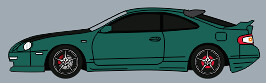
Thanks to everyone who helped me understand what I was doing. It's been quite a trip, but (with luck) finally I think I have this job done. Finished replacing all four wheel bearings (with HF hand tools; no press), both rotors, both drums, both front ball joints and tie rod ends, all brake shoes and pads, all rubber brake lines, brake hardware, sway bar links, rebuilt both front disc calipers, and replaced the passenger side engine mount. Fully tested the brake pedal and adjusted the hand brake. Had to pull a steering knuckle from a Celica in a junkyard to replace the right front because it had bent ears used for mounting the caliper bracket, which bent ears caused the bracket to cut into the rotor when I first got the front brakes installed (new rotor and pads made the -- hidden -- problem evident). Maximum allowable run-out for my 1994 Celica 0.0020" ---------------------------------Right front run-out is 0.0004" -----------------------------------Left front run-out is 0.0007" Yesterday we took Betsy to get inspection and new registration, came back and washed and waxed her, so today my wife was able to drive Betsy to work the first time in three months! If you didn't have this this info and just looked at Betsy, all you would notice is the wax! ![]() Reading about other people's projects has turned me on to things I want to do to Betsy in the near future, but for now I have to give it a rest. I have learned so much my head is larger. Now on to fix the "check engine" light on the 2000 Tacoma pickup. It's showing too much flow through the Exhaust Gas Recirculation (EGR) system, an emissions system that is supposed to eliminate oxides of Nitrogen (gases called NOX) by routing some of the exhaust (burnt gas) through the intake, which cools the heat of combustion, and wastes gas in a trade-off that reduces acid rain. This post has been edited by Langing: Jul 22, 2014 - 11:33 AM |
Jul 22, 2014 - 11:42 AM
|
|
|
Moderator ![]() ![]() ![]() ![]() ![]() Joined Jun 29, '08 From Denver Currently Offline Reputation: 59 (100%) |
-------------------- "Employ your time in improving yourself by other men's writings, so that you shall gain easily what others labored hard for." -Socrates. Even Socrates told us to use the search button!
![]() 2006 Aston Martin V8 Vantage. 1998 Celica GT- BEAMS Swapped. 2022 4Runner TRD Off Road Prenium. 2021 GMC Sierra AT4. |
Jul 22, 2014 - 12:36 PM
|
|
|
Enthusiast ![]() ![]() Joined Apr 24, '14 From Durham, NC, USA Currently Offline Reputation: 0 (0%) |
You can say that again! Still, since each step was a learning adventure, I felt a bit sad, for some reason, when this overly drawn out project finally completed. Starting out I just wanted to redo her brakes, but once I was into it, there were the wheel bearings, and then . . . Momentum was building when coming down the stretch but I had learned some stuff so I changed out one brother's front brake pads on his Honda Accord EX, and another brother's left front axle and both front shocks on his (gigantic) Suburban to show myself that I had, indeed, learned something. Now I'm finished with my Betsy "wheels" project, but, there are so many things I see you guys doing to your Celicas that I feel I want to start another project on Betsy and maybe take Betsy to full restoration or beyond BTW: Is there a venue on here where I could post some pics of Betsy's dermatological "problems" and get a group of you experts to advise as to what I could do about them and then what needs to be added to make her body look "striking" so I don't feel like people think I am just driving an OLD CAR? This would sure help my wife. . . to see Betsy looking better than before after I've spent months working on her. All that work I did. . . Betsy drives smoother than ever, but there is NOTHING THAT SHOWS!!! I need help figuring out where to start, advice that 'hopefully' comes without the word 'LOWER'. In the meantime, I've got to fix that EGR problem. |
Jul 22, 2014 - 10:55 PM
|
|
![]() Enthusiast ![]() ![]() ![]() ![]() Joined Oct 29, '11 From Haltom City, Texas Currently Offline Reputation: 1 (100%) |
6gcs definately look better an inch or two lower.
Some wheels and sideskirts would definately make it look sexier too. |
Jul 23, 2014 - 10:06 AM
|
|
|
Enthusiast ![]() ![]() Joined Apr 24, '14 From Durham, NC, USA Currently Offline Reputation: 0 (0%) |
6gcs definately look better an inch or two lower. Some wheels and sideskirts would definately make it look sexier too. How do I go about lowering it an inch or so, and what problems might I expect after she's been lowered? Like, will I still be able to get the floor jack under her, and will she scrape over "slow humps?" Or is there some tutorial article on this site? Could you point me to a couple of "wheel" photos as examples you think might look good? What are "side-skirts"? Where do I get them? Are they hard to add? I'm still very new at doing this kind of work on my Celica. I'm pretty good down around the wheels at this point, especially caring for brakes and wheel bearings; no fear. But there's still a ton I don't know and want to learn; I very much appreciate your help. |
![]() ![]() |
| Lo-Fi Version | Time is now: December 6th, 2025 - 11:08 PM |